


If you mold O-rings, sealing rings, grommets, bellows, or rubber-to-metal bonded parts in any real volume, a rubber injection molding machine is the most repeatable molding route available today. Compared with compression or transfer molding, it shortens cure cycles, holds tighter dimensional tolerances, and produces far less flash. In practical terms, manufacturers who move a given tool from a compression press to an injection press typically report 30-50% shorter total cycle times and flash-related scrap that drops from 5-10% down to 1-3% once the tool is properly vented and the cold runner is balanced.
That advantage comes with a cost structure you need to understand before buying: a higher machine price, more complex tooling, and a steeper setup learning curve. This guide gives you a direct answer for each major decision, starting with the conclusion: choose your machine by matching clamp force to projected part area, shot size to gross shot weight, injection pressure to compound viscosity, and control capability to your required repeatability. The rest of the guide explains why these four matches decide nearly every success-or-failure case we see.
What Is a Rubber Injection Molding Machine and How Does It Work?
A rubber injection molding machine is a hydraulic or servo-electric press that plasticates a rubber compound, forces it through a nozzle into a closed mold, and holds the mold shut until the material cures. Four subsystems do the actual work, and each one sets a limit on what you can mold.
- Clamping system: opens and closes the mold, and applies tonnage; tonnage must exceed internal cavity force or flash appears at the parting line.
- Injection unit: an in-line reciprocating screw or a screw-plunger arrangement plasticates, meters, and injects the shot.
- Heating and temperature control: barrel zones, nozzle, and platens are heated independently; rubber curing is strongly temperature-sensitive, so control within +/-3 degrees Celsius on the platen surface and +/-2 degrees Celsius on barrel zones is usually expected.
- Hydraulic or electric drive and control: provides tonnage, injection speed, and program logic, with per-cycle pressure and temperature records for quality tracing.
The working cycle is: plasticating in the barrel, metering a precise shot, injecting at a set speed and pressure, packing to eliminate shrinkage voids, curing under pressure in the heated mold, and finally opening and demolding. The machine also coordinates the mold's optional cold runner or insulating plate, because keeping the runner cold prevents material from curing inside the shot channel.
| Method | Cycle speed | Flash and scrap | Tooling cost | Best suited for |
|---|---|---|---|---|
| Compression molding | Slowest; cure starts after loading | Heavy flash; 5-10% scrap common | Lowest | Short runs, low-cost tooling, large simple parts |
| Transfer molding | Medium | Moderate flash and waste | Medium | Inserts and moderately complex geometry |
| Injection molding | Fastest; material fills before cure | Minimal; 1-3% scrap typical | Highest | High-volume precision parts, thin walls, complex cavities |
Main Types of Rubber Injection Molding Machines
The first practical choice is machine architecture. Vertical machines are the most common in rubber molding because mold loading, insert placement, and demolding happen from the top, and gravity keeps inserts in position. Horizontal machines are preferred for fully automated cells, especially when parts need to drop freely from a lower mold half or when a conveyor and robot need straight-line access.
Beyond orientation, you choose between a C-frame and a four-column frame. C-frame presses open on three sides, which makes tooling access and part removal easier but limits rigidity under eccentric loads. Four-column presses provide better platen parallelism and higher tonnage limits. Injection units also differ: a screw-ram unit uses a screw to feed a separate plunger or ram, giving precise shot control and constant volume, while a screw-plastication unit injects directly with the screw, which is simpler but slightly less consistent at very small shot sizes.
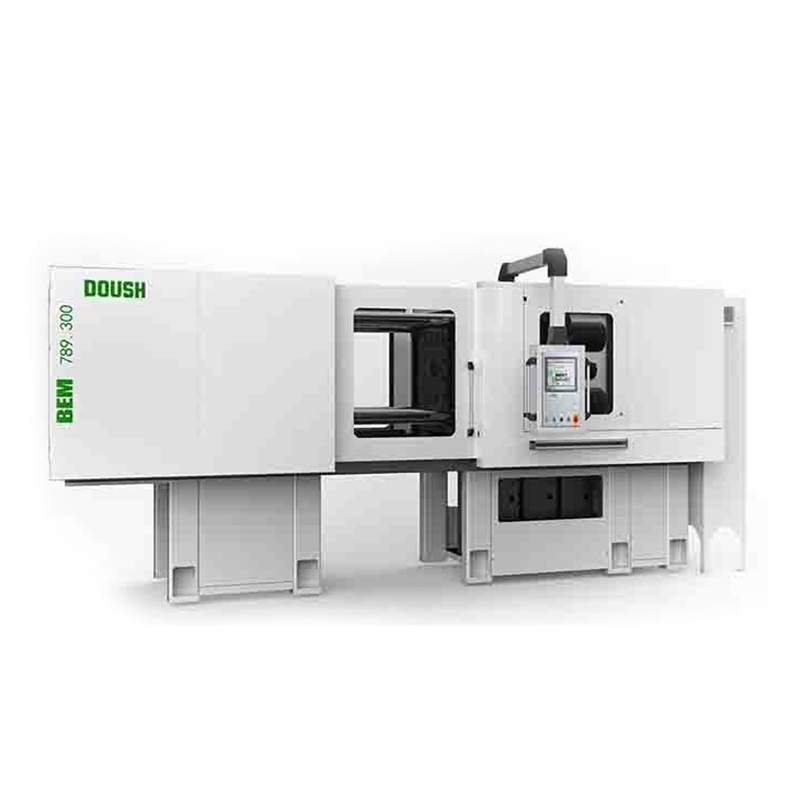 Vertical and Horizontal Rubber Injection Molding Machine with Servo HydraulicsChoose between C-frame and four-column designs, with screw-ram or screw-plastication injection units. This machine produces uniform rubber parts such as seals and shock absorbers, with precise shot control and accurate temperature regulation.View Product →
| Machine type | Typical clamping range | Best applications | Key advantage |
|---|---|---|---|
| Vertical | 10-500+ tons | Inserts, rubber-to-metal bonds, O-rings, small and medium seals | Gravity-assisted loading and easy tool access |
| Horizontal | 10-300+ tons | Fully automated high-volume lines; parts that drop free | Straight-through material flow and robot-friendly layout |
| C-frame | 10-150 tons | Small parts, manual loading, quick set changes | Three-sided accessibility and compact floor footprint |
Key Technical Specifications That Actually Matter
Four numbers on the data sheet tell 80% of the story: clamp force, shot volume, injection pressure, and injection rate. The remaining 20% sits in platen size, daylight, heating configuration, and control resolution.
Clamp force rule of thumb: for most rubber compounds, allow 200 to 400 kgf per square centimeter of projected part area, counting cavities, runner, and flash grooves. Use the higher end for hard compounds of 70 Shore A and above and for thick wall sections. A 250 square centimeter projected area part therefore needs roughly 10 metric tons at the low end; a real production tool with four cavities and a cold runner will likely need 15-25 tons, which is why a 25-ton machine is the common entry point for small seal work.
Shot volume: your gross shot, meaning material in all cavities plus the runner system and any pad, should sit between 40% and 80% of rated shot capacity. Below 40%, residence time in the barrel becomes long and scorch risk rises. Above 80%, you lose filling control and pressure balance. For rubber, never size the shot at 100% of rated capacity; curing inside the barrel is unforgiving.
Injection pressure: most rubber compounds need about 120 to 200 MPa at the nozzle for thin sections. High-viscosity compounds such as high-durometer EPDM or heavily reinforced FKM may require the upper end. Injection rate also matters because the cavity must fill before the material starts to scorch; a useful minimum is filling the gross shot in 2-4 seconds for small parts and 5-8 seconds for large, thick parts. When comparing machines, ask for the pressure versus rate curve instead of the single maximum figure on the brochure.
| Machine class | Clamp force | Typical shot volume | Injection pressure | Typical part examples |
|---|---|---|---|---|
| Compact bench press | 10-25 tons | 50-200 cubic centimeters | 150-200 MPa | O-rings, grommets, small seals |
| Mid-range vertical | 50-150 tons | 300-1500 cubic centimeters | 140-180 MPa | Bushings, bellows, bonded parts |
| Large vertical | 200-500+ tons | 1500-5000 cubic centimeters | 120-160 MPa | Anti-vibration mounts, air springs, large boots |
Matching the Machine to Your Rubber Compound and Mold Design
Your compound is the most aggressive variable in machine sizing. A 60 Shore A EPDM with good scorch safety behaves very differently from a 90 Shore A NBR-heavy seal compound or a fluororubber that cures fast at low temperatures. High-viscosity and fast-curing compounds force you into shorter barrel residence, lower barrel temperature settings, and more careful cold runner insulation. Ask your compound supplier for the Mooney viscosity and the cure curve data (t10 and t90 at your planned mold temperature) before you fix a machine specification.
Cold runner design is a project in itself. A properly balanced cold runner delivers all cavities at the same pressure and temperature, produces no cured sprue waste, and trims flash by using the runner as a pressure pad. If you expect to change compound frequently, look for quick-release screw and barrel assemblies on the machine, because barrel cleaning between compounds eats a large amount of productive time when the assembly is hard to remove.
Liquid silicone rubber (LSR) is a different process: raw material arrives in drums or pails, is pumped by a supply unit, and must stay cool in the barrel instead of hot. An LSR machine needs a water-cooled barrel, a cooled nozzle, a static mixer right at the nozzle, and precise injection-speed control because LSR fills cavities very fast with low viscosity. Never run LSR in a machine designed only for solid rubber, unless the barrel, screw, nozzle, and material supply were specifically converted. For more on how different rubber families influence machine settings, our deeper notes on rubber material characteristics cover the main polymer groups, and their cure behavior is the input you need for barrel and mold temperature planning.
 Liquid Silicone Rubber Injection Molding Machine with Static MixingFully computer-controlled machine for LSR molding, featuring accurate metering and uniform mixing via a static mixer. Includes cooling channels in manifold and nozzle for easy cleaning, reducing waste and manpower in producing silicone parts.View Product →
Automation, Energy Efficiency, and Cycle-Time Wins
Cycle time is where injection molding wins the cost argument. A typical small O-ring tool running 16 cavities on a compression press cycles at 120-180 seconds, including manual loading and stripping. The same tool on an injection machine with a cold runner cycles at 50-80 seconds largely unattended, because filling happens in seconds, the cure timer starts when the cavity is full, and demolding is automatic. Across a two-shift day, one injection press frequently replaces two compression presses for the same output.
Energy consumption follows similar logic. Servo-hydraulic rubber injection machines adjust pump speed to demand, unlike older fixed-displacement pumps that run at constant speed. In partial-load phases such as mold closing and holding, servo-driven machines commonly consume 30-50% less energy than fixed-pump hydraulics of the same clamp size. Integrated vacuum systems also help: a vacuum chamber removes trapped air from deep cavities, which reduces reject rates on O-rings and precision bellows from double digits to under 2% for many producers.
Modern machines come with option packages that decide labor needs: shuttle tables for insert loading, two-platen designs for faster mold changes, quick mold clamps, automatic material weight dosers, robotic demolding, and data output that records shots, pressures, temperatures, and cure data per cycle. When comparing quotes, price the machine with the automation items you actually need; adding a vacuum hood or a robot later costs more and occupies the same floor space.
| Product | Shot weight | Cure temperature | Cycle time | Main driver |
|---|---|---|---|---|
| O-ring, 16 cavities | 20-50 grams | 170-180 degrees Celsius | 45-80 seconds | Cure time of thin section |
| Automotive grommet | 100-300 grams | 165-175 degrees Celsius | 80-150 seconds | Wall section and cure time |
| Anti-vibration mount | 500-1500 grams | 155-165 degrees Celsius | 3-6 minutes | Long cure of thick rubber |
| Oil seal with insert | 50-200 grams | 165-175 degrees Celsius | 90-150 seconds | Insert settling before cure |
Budgeting, Price Ranges, and Return on Investment
You can expect to pay roughly USD 40,000 to 80,000 for a compact 25-ton vertical rubber injection machine with basic controls, USD 90,000 to 180,000 for a 100-ton class machine with vacuum and servo drive, and USD 250,000 to 600,000 or more for a large 300-500 ton machine with full automation. These ranges come from equipment-price benchmarks among Chinese and European machine manufacturers for 2025-2026; import duties, freight, installation, trial tooling, and operator training are usually quoted separately.
The biggest cost drivers are clamp force, injection unit size, vacuum capability, automation level, and after-sales support structure. Many buyers overspend on tonnage and underspend on heating control. A 50-ton machine with excellent platen flatness and tight heating control makes better O-rings than a 100-ton machine with poorly maintained platens. Rarely does anyone regret paying for a servo pump; energy amortization typically lands between 18 and 30 months on two-shift operation.
A practical ROI example: if you currently run 200 metric tons of compound per year through compression molding with 6% flash and trim loss, that is 12 tons of wasted compound. Switching to cold-runner injection with 1.5% total waste recovers 9 tons per year. At USD 3.5 per kilogram for a typical EPDM compound, saving 9,000 kilograms represents roughly USD 31,500 of material each year, before labor and cycle-time savings. A USD 120,000 machine is then justified within about 4 years by material alone, and in under 2 years when labor savings are added.
| Machine class | Clamp force | Typical price range | Usually includes |
|---|---|---|---|
| Compact C-frame | 15-25 tons | USD 40,000-80,000 | Basic PLC control, no vacuum |
| Mid-range vertical | 50-150 tons | USD 90,000-180,000 | Servo pump, vacuum kit, multiple heating zones |
| Heavy vertical | 200-500 tons | USD 250,000-600,000+ | Full automation, shuttle table, data-ready controls |
| Horizontal production cell | 100-300 tons | USD 200,000-500,000 | Robot interface, conveyor, closed-loop control |
Common Applications Across Industries
Rubber injection machines are workhorses across several industries with different priorities. Automotive sealing parts dominate the market, because EPDM window seals, O-rings, and oil seals need consistent density and smooth surface finish at high volumes. Footwear manufacturers use multi-station sole injection machines that rotate platens under separate injection units to achieve several hundred soles per hour. Electrical and electronics producers rely on vertical machines with shuttle tables for over-molded connectors and cable grommets. Hydraulics and pneumatics manufacturers use injection molding for NBR and FKM seals that must meet tight tolerance stackups.
Specialized machine families exist for a reason. A C-frame press suits small, frequent job changes. A fully automatic rubber sole injection machine with three or six stations keeps the clamp closed on one station while the injection unit fills the next, improving output noticeably for footwear lines. For LSR, you need the water-cooled barrel machine described earlier; for very large elastomeric parts such as air springs, a horizontal machine with generous daylight and long stroke is a safer choice.
If your product list spans several industries, buy the machine for the tightest-tolerance product, not the largest part. The largest product determines platen size and stroke; the tightest product determines heating precision, injection repeatability, and vacuum capability. Both constraints land in one machine, but the tolerance-driven features usually cost more and are harder to retrofit later.
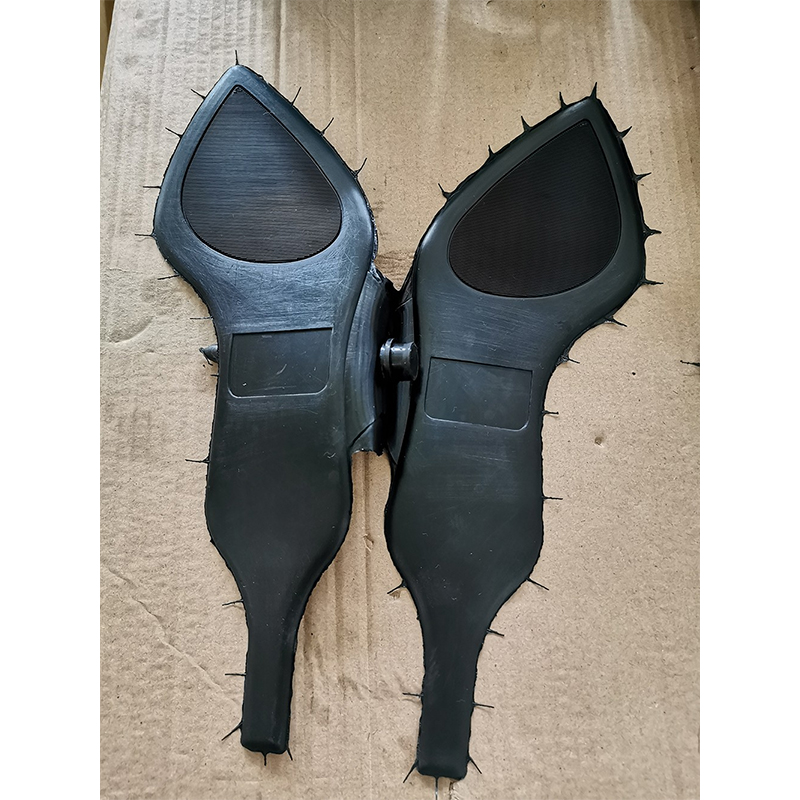 Fully Automatic Rubber Sole Injection Machine for Difficult MoldingDesigned specifically for rubber soles, this machine offers full automation, short vulcanization time, and reduced material waste. It handles thick soles, high heels, and thin-wall designs, cutting labor and pre-forming steps effectively.View Product →
Maintenance and Safety Best Practices
A rubber injection machine is a long-term asset; with proper maintenance, 20 years of service is realistic. The most common premature failures come from hydraulic oil contamination, burned heater bands, nozzle seat leakage, and platen surface damage from dropped tools. A simple maintenance regimen prevents most of those issues. Follow the supplier schedule for critical components, and log every repair so wear patterns become visible before they stop production.
- Daily: wipe platens clean, inspect the nozzle and material feed, check oil level and temperature, verify safety guards and light curtains function.
- Weekly: clean the cold runner and nozzle tip, lubricate tie bars and ejector mechanisms, examine heater band wires for chafing.
- Monthly: take a hydraulic oil sample, check platen parallelism with a feeler gauge, measure heating zone accuracy against the controller display, and verify pressure settings against gauge readings.
- Quarterly: check screw and barrel wear, and replace worn non-return valves if fill time has drifted more than 10% from the original setting.
Safety deserves no shortcuts. The hot platen, moving clamp, and high-pressure hydraulics create three simultaneous hazards. Modern machines use light curtains, two-hand controls, and mechanical mold locks. Operators should never reach into the mold area under power; every setup job starts with a hydraulic pressure dump and a mechanical lockout on the clamp. Keep the platen area free from rubber dust and release agent residues, because they burn and create airborne irritants. These points, plus a fault-finding routine, are covered in our detailed equipment maintenance and servicing article.
Frequently Asked Questions
What is the difference between a rubber injection molding machine and a plastic injection molding machine?
The mechanics look similar, but rubber machines use higher injection pressures, and the mold runs at cure temperature of 150-200 degrees Celsius instead of being cooled. Plastic machines plasticate at 180-300 degrees Celsius and cool the mold to set the part. Rubber screws typically have lower compression ratios, and rubber machines include features for handling uncured, tacky compound, such as wider feed throats and water-cooled nozzles.
How much does a rubber injection molding machine cost?
Entry-level 15-25 ton vertical machines start near USD 40,000. A production-ready 100-ton vertical machine with servo energy saving and vacuum runs from USD 90,000 to 180,000. Large automated systems above 300 tons can reach USD 250,000-600,000 or more. Budget separately for trial tooling, freight, installation, and operator training.
What clamp force do I need for O-rings?
Compute projected area across all cavities plus runner, then multiply by 200-400 kgf per square centimeter. A 16-cavity seal tool with 50 square centimeters of total projected area needs about 10-20 tons, so a 20-25 ton machine is the safe, common choice. Buy a little more tonnage than the calculation suggests, because flash grooves and venting add effective projected area.
Can one machine process both solid rubber and liquid silicone rubber?
Only with dedicated conversion kits. Solid rubber machines have hot barrels; LSR machines need water-cooled barrels, cooled nozzles, a static mixer, and a supply pump. Conversion back and forth is time-consuming but workable on machines designed for it. Producers who run both material families at scale usually keep dedicated machines.
What cycle time should I expect?
Small O-rings and seals on a cold-runner tool typically cycle in 45-90 seconds. Grommets and small automotive parts run 80-150 seconds. Thick anti-vibration mounts take 3-6 minutes because cure time is controlled by wall thickness. The best lever for shortening cycles is higher mold temperature combined with a fast-curing compound, not faster machine mechanics.
How long does a rubber injection molding machine last?
With annual maintenance, hydraulic oil changes every 3,000-4,000 hours, and regular screw and nozzle wear checks, 20 or more years of two-shift service is realistic. The control system and servo pumps usually need a mid-life refresh after 10-12 years, at a far lower cost than buying a new machine.

